Back to blog
Thailand21 May 20263 min read
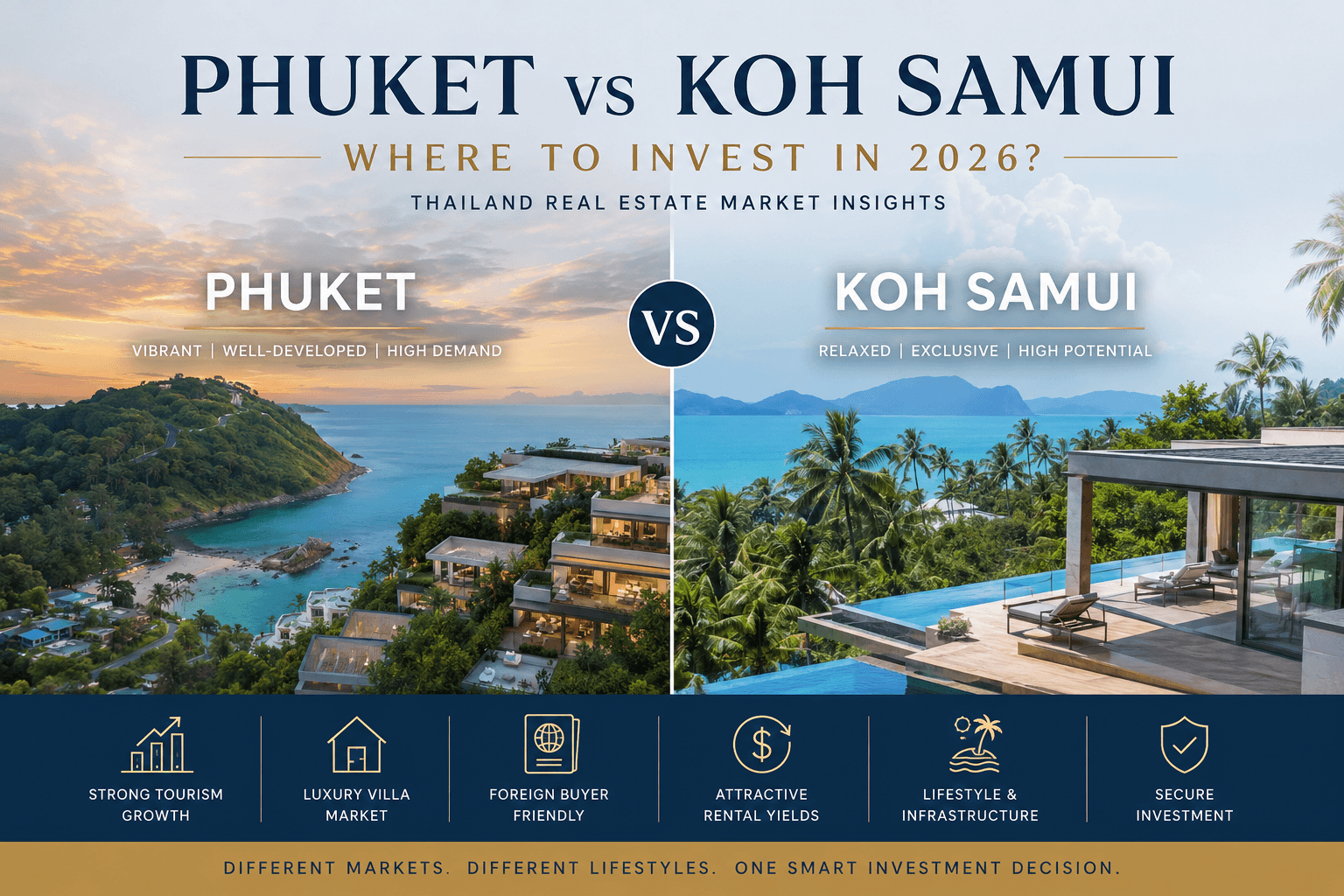
Phuket vs Koh Samui – Where Should You Buy Property in 2026?
Two islands, two investment strategies. If you’re considering buying property in Thailand, this guide breaks down ROI, Airbnb potential, freehold options, and market saturation — so you can decide which destination fits your goals.
If you’re thinking about buying property in Thailand, sooner or later you’ll face the same question: Phuket or Koh Samui? Both are stunning, both attract millions of tourists — but as investment markets, they are very different animals. This article won’t tell you which one is “better.” It’ll help you figure out which one is right for you.
## 1. The Basics: How Are Phuket and Koh Samui Different?
Phuket is Thailand’s largest island, with mature infrastructure, an international airport, and a well-established expat community. The market is developed, prices are higher, but so is the breadth of demand — from short-term tourists to long-term renters and retirees.
Koh Samui, by contrast, is smaller and more intimate. For years it was the “quiet alternative” for those who wanted to avoid the Phuket crowds. Infrastructure is improving, but still lags behind — which represents both a risk and an opportunity, depending on your investment horizon.
## 2. ROI Comparison – Where Do Investors Earn More?
In Phuket, net yields typically range from 5–8% per year, with premium locations (Bang Tao, Rawai, near Patong) pushing higher. The market is liquid, and resale is relatively straightforward.
In Koh Samui, average yields are similar at 5–7%, but luxury villas during peak season can significantly outperform that. The risk: lower occupancy in off-season, and a shallower market overall.
## 3. Villa vs Condo – Which Property Type Works Best Where?
In Phuket, both categories perform well. Condos are especially popular with investors looking for lower entry prices and simpler management. Villas in premium areas (Surin, Layan, Kamala) can command exceptional nightly rental rates.
In Koh Samui, villas dominate. The island’s brand is built on luxury, privacy, and nature — something a condo simply can’t deliver. If you’re investing in Samui and want serious returns, a villa is almost always the right choice.
## 4. Airbnb & Short-Term Rental Potential
Phuket is one of Southeast Asia’s top-performing Airbnb markets. Tourist flow is consistent year-round, with peak season running November through April. A well-positioned villa in Bang Tao can achieve 80–90% occupancy during high season.
Koh Samui is also strong, but more seasonal. Best months: December through April. The low season (especially October–November) can significantly pull down annual averages — something to factor carefully into your cashflow projections.
## 5. Infrastructure & Airport Accessibility
Phuket International Airport is one of Thailand’s busiest, with direct connections from Europe, across Asia, and from Australia. This directly underpins the stability of tourist demand.
Koh Samui’s airport is smaller and more expensive to fly into (largely due to Bangkok Airways’ near-monopoly on routes), which raises travel costs and narrows the potential visitor pool. This may change in the future, but for now it’s a real constraint worth considering.
## 6. Freehold Opportunities – Where Do You Have More Flexibility?
Foreign nationals cannot directly own land in Thailand — but they can own condos, provided foreign ownership in any given building doesn’t exceed 49%. This applies on both islands.
For villas, most structures are leasehold-based (typically 30+30+30 years) or involve a Thai company holding the title. Phuket has a deeper pool of experienced lawyers and developers who can guide you through these structures. In Koh Samui, that ecosystem is less developed, so due diligence matters even more.
## 7. How Saturated Is the Market?
Phuket’s market is increasingly competitive — particularly in the mid-range condo segment. Prices are unlikely to spike dramatically, but rental demand is far more stable. It’s a mature market: lower risk, lower upside.
Koh Samui is less saturated, especially at the luxury end. If you enter now with the right location, there is room for meaningful capital appreciation — but it requires more research and stronger local knowledge.
## 8. Summary – Which Island Is Right for You?
Choose Phuket if you want stable, predictable returns, lower risk, and a liquid market where resale is manageable.
Choose Koh Samui if you’re focused on luxury villas, comfortable with seasonal risk, and believe in the island’s long-term growth potential.
The best decision? Visit both — and work with someone who knows these markets from the inside.
Next step
Ready to turn insight into action?
Book a free, no-obligation consultation with Benjamin and get a curated shortlist of off-plan opportunities matched to your goals.
Book a Consultation TodayB
Benjamin Nagy
Off-plan property investment advisor