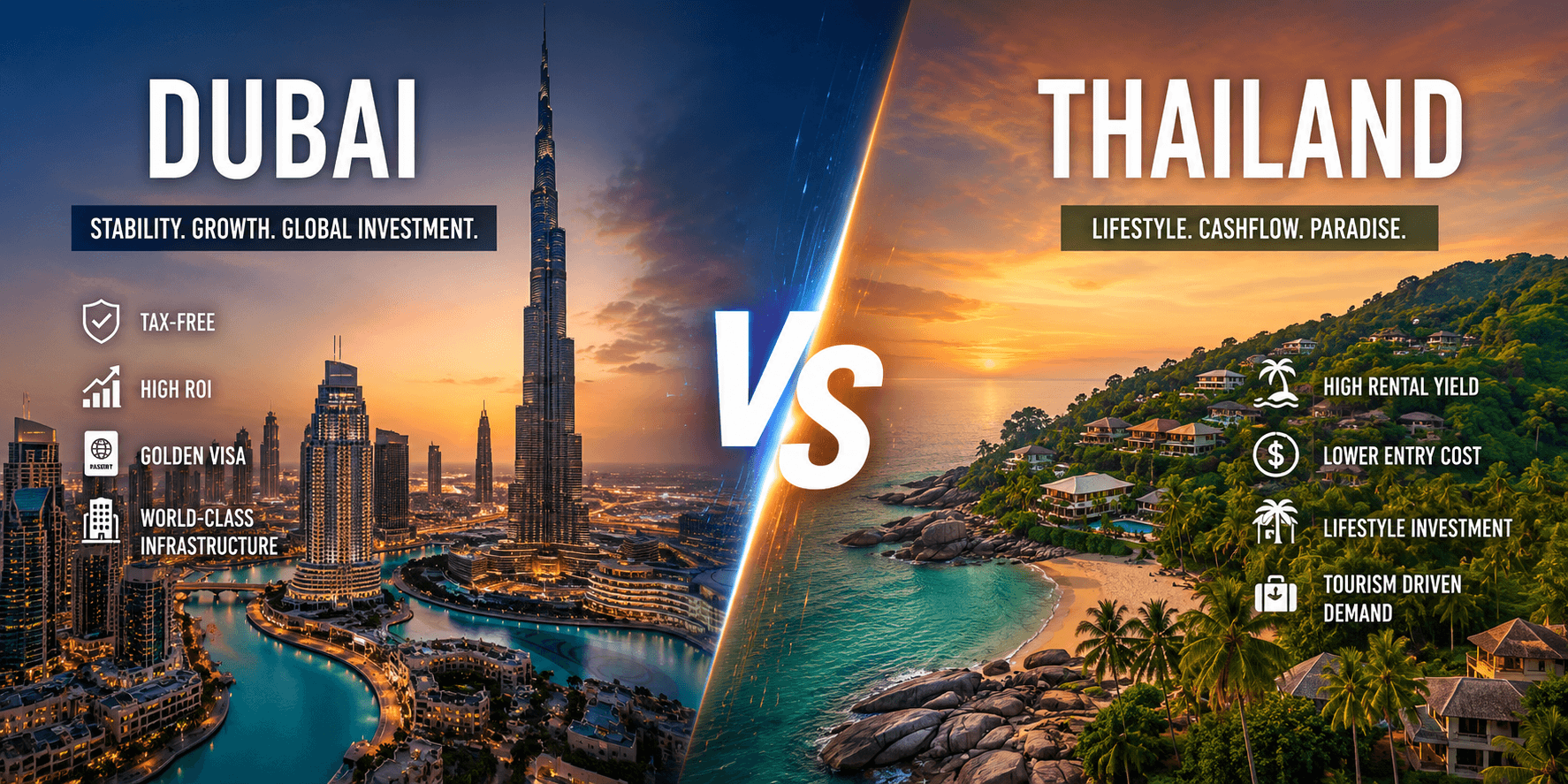
Dubai vs Thailand Real Estate: Best 2026 Investment?
Compare Dubai and Thailand real estate for 2026. Maximize returns with tax benefits or high 15% rental yields. Find your ideal strategy today.
Quick answer: Dubai offers long-term appreciation, stability, high liquidity, tax benefits, and Golden Visa options in a global financial hub. In contrast, Thailand delivers higher short-term cashflow, tourism-driven rental yields up to 15%, and lower entry prices. The better choice depends on prioritizing long-term capital growth or high rental income.
Dubai vs Thailand – Which Market Could Perform Better in 2026?
Over the last few years, international real estate investment trends have changed significantly.
Traditional European markets such as London, Vienna, or even Budapest are offering lower yields while entry prices continue to rise.
At the same time, two markets have shown exceptionally strong momentum:
* 🇦🇪 Dubai
* 🇹🇭 Thailand (especially Phuket and Koh Samui)
Both markets serve completely different investor profiles, which means the real question is not which one is “better” — but which one fits your investment strategy more effectively.
⸻
🇦🇪 Dubai – Stability, Infrastructure & Global Capital Inflow
Dubai has evolved into one of the world’s strongest international investment hubs over the last 15 years.
The city benefits from:
* world-class infrastructure
* rapid development
* investor-friendly regulation
* and strong international capital inflow
From an investor perspective, key advantages include:
✅ no annual property tax
✅ no capital gains tax
✅ strong short-term rental market
✅ Golden Visa opportunities
✅ high liquidity
✅ strong developer ecosystem
✅ world-class infrastructure
Dubai is no longer viewed purely as a speculative market.
Today, it increasingly operates as a global financial and business center attracting international wealth and long-term residents.
Currently, some of the strongest growth areas include:
* Dubai Islands
* Palm Jebel Ali
* JVC
* Dubai Creek Harbour
* Dubai South
* waterfront and branded residences
⸻
What ROI Can Investors Expect in Dubai?
In the right locations, investors can typically achieve:
* ~5–8% long-term rental yields
* ~7–10%+ short-term rental/Airbnb yields
One of Dubai’s biggest advantages is the off-plan market structure, allowing investors to benefit from:
* lower initial capital requirements
* payment plans
* leverage opportunities
* pre-handover appreciation
Dubai also benefits from extremely strong international demand from:
* Europe
* Russia
* China
* India
* and the broader Middle East
⸻
🇹🇭 Thailand – Tourism-Driven High Cashflow Market
Thailand operates under a very different investment dynamic.
The market is primarily driven by:
* tourism
* lifestyle buyers
* short-term rentals
* and holiday properties
Phuket and Koh Samui have experienced very strong international demand in recent years, particularly from:
* European buyers
* Australians
* Russians
* Chinese investors
* digital nomads
* and retirees
One of Thailand’s biggest advantages is the significantly lower entry point compared to Dubai.
Modern condominiums, resort developments, and pool villas are often available at much more accessible pricing levels.
⸻
What ROI Can Investors Expect in Thailand?
Well-managed short-term rental properties can often generate:
* ~8–15% annual returns
especially in areas such as:
* Phuket
* Bangtao
* Rawai
* Nai Harn
* Koh Samui
Thailand’s strongest advantage remains its tourism-driven economy and strong international visitor growth.
However, Thailand requires significantly more attention regarding:
* legal structures
* project selection
* property management quality
* ownership structures
The difference between freehold and leasehold ownership is critical for foreign investors, making proper professional guidance extremely important.
⸻
Which Market Could Be Better for You?
Dubai may be the better choice if you are looking for:
✅ long-term appreciation
✅ global financial center exposure
✅ liquidity
✅ Golden Visa opportunities
✅ world-class infrastructure
✅ a highly regulated market
⸻
Thailand may be the better choice if you are looking for:
✅ stronger cashflow potential
✅ lifestyle investment opportunities
✅ lower entry prices
✅ short-term rental income
✅ holiday-home usage combined with investment
✅ tourism-driven demand
⸻
Final Thoughts
In 2026, both Dubai and Thailand offer exceptional opportunities for international real estate investors.
However, the two markets operate under completely different investment models.
Dubai is stronger in:
* stability
* infrastructure
* global capital inflow
* and long-term appreciation
while Thailand excels in:
* cashflow
* tourism
* lifestyle
* and lower entry-level investment opportunities
The right decision ultimately depends on the investor’s goals, risk profile, and long-term strategy.
Frequently Asked Questions
What rental yields can investors expect in Dubai?
In Dubai, investors can typically achieve 5% to 8% long-term rental yields. Short-term rentals or Airbnb properties can generate returns of 7% to 10% or more in prime locations.
How do property yields in Thailand compare to Dubai?
Well-managed short-term rental properties in Thailand can generate annual returns between 8% and 15%, particularly in Phuket and Koh Samui. This gives Thailand stronger cashflow potential compared to Dubai's typical yields.
What are the key tax advantages of investing in Dubai real estate?
Key tax benefits in Dubai include zero annual property tax and no capital gains tax for investors. Additionally, buyers benefit from strong developer regulation, off-plan payment plans, and Golden Visa opportunities.
What should buyers consider before buying property in Thailand?
Foreign investors in Thailand must pay careful attention to legal structures, project selection, and property management quality. Understanding the critical distinction between freehold and leasehold ownership makes professional guidance essential.